
Among the 30 Sensex firms, Bajaj Finserv, IndusInd Bank, Tech Mahindra, Bajaj Finance, Kotak Mahindra Bank, Axis Bank, NTPC, and Sun Pharma were the major gainers. On the other hand, Bharti Airtel, ITC, Adani Ports, JSW Steel and Tata Motors were among the laggards.

The Securities and Exchange Board of India (Sebi) is considering segregation of settlement for proprietary trades and retail trades to avoid misuse and circumvention by certain brokers, its chairperson Madhabi Puri Buch said recently. Proprietary trading refers to trades done by brokers and other financial institutions using their own capital. "There are some people who are permitting access to their clients through prop accounts for a variety of reasons, including wanting to fund their margins.
Markets regulator Sebi on Wednesday barred former CEO of IndusInd Bank, Sumant Kathpalia, and four other senior officials from accessing the securities markets in connection with an alleged insider trading in the bank's shares. In addition to the market ban, Sebi has impounded Rs 19.78 crore collectively from the five individuals, according to an interim order passed by the regulator.

The advance/decline ratio (ADR) - a gauge of market breadth - has remained negative (below 1) for a second consecutive month. In other words, the number of stocks declining is outpacing those rising, as a brutal selloff by overseas investors and lofty valuations weigh on sentiment. According to BSE data, the ADR for October stands at 0.98 for the second month in a row.

From the Sensex firms, Adani Ports, Bajaj Finance, Tech Mahindra, IndusInd Bank, Nestle and Tata Steel were among the major laggards. In contrast, Mahindra & Mahindra, Titan, Larsen & Toubro, Bharti Airtel and Maruti were among the gainers.

The National Stock Exchange (NSE) and the BSE has announced that three Adani group companies -- Adani Enterprises, Adani Power and Adani Wilmar -- will move out of the short-term additional surveillance measure (ASM). The stocks will be excluded from the short-term ASM framework with effect from March 17, according to separate circulars available on the exchanges. The NSE and the BSE had put the three Adani group firms, including the flagship firm Adani Enterprises, under the ASM framework on March 8.

Bombay Stock Exchange (BSE) shares have lost more than a third of their value in the last six months, as a lacklustre market has hurt volumes in the exchange's cash segment and several efforts to revive its derivatives segment are yet to show results.

The National Stock Exchange (NSE) of India is going to indefinitely defer the internal deadline set for extending trading hours, according to sources in the know. The exchange aimed to introduce a three-hour evening session exclusively for index derivatives by March 2024, contingent upon regulatory clearance from the Securities and Exchange Board of India (Sebi). Sources indicate that the market regulator has not provided a favourable indication, dimming optimism surrounding the proposal.

Ola Electric, India's largest electric vehicle company, has achieved a significant milestone by becoming the first two-wheeler automotive electric vehicle (EV) manufacturer in India to receive incentives under the Production Linked Incentive (PLI) Scheme for Automotive and Auto Component (PLI-Auto Scheme). The company has been granted a total incentive of Rs 73.74 crore for the Determined Sales Value of FY 2023-24 under the scheme, according to a stock exchange filing by the company.
Mumbai-based pharma major Wockhardt, which is gearing up to launch its promising antibiotic candidate Zaynich soon, on Friday announced a shift in its United States (US) operations. The Indian pharma giant revealed that it has decided to exit the generics pharmaceutical segment in the country.

At present, investors who can buy up to 15 per cent in a stock exchange include domestic banks and financial institutions, clearing corporations, depositories and stock exchanges.

From the 30-share Sensex pack, Infosys, ICICI Bank, Kotak Mahindra Bank, Mahindra & Mahindra, State Bank of India, HCL Technologies, Axis Bank, NTPC and HDFC Bank were among the laggards. In contrast, Maruti, IndusInd Bank, Adani Ports, ITC and UltraTech Cement defied broader market trends and ended in positive territory.

From the Sensex constituents, Tata Steel, Bajaj Finance, Bharti Airtel, Adani Ports, Eternal, Bajaj Finserv, NTPC, HDFC Bank, Reliance Industries and Axis Bank were among the major gainers. In contrast, Trent, State Bank of India, Tech Mahindra, Maruti and Mahindra & Mahindra were among the laggards.
HCL Tech, State Bank of India, Infosys, Tech Mahindra, Tata Consultancy Services, Bajaj Finserv, Larsen & Toubro, Mahindra & Mahindra and Titan were also among the losers in the Sensex pack. Eternal, Hindustan Unilever, Asian Paints, ITC, Tata Motors and NTPC were among the gainers.

From the Sensex constituents, Adani Ports, Tata Steel, Kotak Mahindra Bank, UltraTech Cement, Bajaj Finserv and Titan were among the biggest gainers. In contrast, Power Grid, Trent, NTPC, Maruti, HCL Tech and Bharat Electronics were among the laggards.
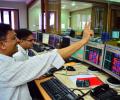
From the Sensex firms, Eternal, Power Grid, ITC, Bajaj Finserv, Nestle, Axis Bank, Kotak Mahindra Bank and Adani Ports were among the biggest gainers. Sun Pharma was the only laggard, declining nearly 2 per cent.

Equity benchmark indices Sensex and Nifty settled lower for the sixth straight session on Monday due to heavy selling in bellwether stocks including HDFC Bank and Reliance Industries amid mixed trends in the global markets and outflow of foreign funds. Falling for the sixth consecutive session, the BSE Sensex tumbled 638.45 points or 0.78 per cent to settle at 81,050. During the day, it plummeted 962.39 points or 1.17 per cent to 80,726.06. The NSE Nifty slumped 218.85 points or 0.87 per cent to end at 24,795.75.

The exchange may now look to its real estate business for cash flows

Eternal was the biggest gainer in the Sensex pack, jumping 4.50 per cent, followed by Power Grid, ICICI Bank, Reliance Industries, UltraTech Cement, Adani Ports, Sun Pharma, ITC and Hindustan Unilever were also among the winners. In contrast, IndusInd Bank, Axis Bank, Bajaj Finserv and Bajaj Finance were among the laggards.

From the Sensex firms, Hindustan Unilever, Kotak Mahindra Bank, Trent, Reliance Industries, Asian Paints and ITC were among the gainers. However, Bharat Electronics Ltd, Tech Mahindra, UltraTech Cement, Maruti and Eternal were among the laggards.

For investors who missed the initial IPO frenzy, the market correction is an opportunity to selectively invest in promising names, but patience and careful evaluation remain the key.

Sebi is looking at introducing a system where an investor can sell shares as soon as they are allotted in an Initial Public Offering (IPO) to curb grey market activity, chairperson Madhabi Puri Buch said on Tuesday. The chief of the capital markets regulator also announced that the top two proxy advisory firms are on the verge of launching a portal which will be a repository of related party transactions and will be useful in judging the governance standards in a company for any stakeholder.

This translates into an annual return of 40 per cent, suggests a recent note by the World Gold Council.
The stock exchange on which they are traded boasts higher profits than most of the companies whose shares are hitting new highs. Only 37 of approximately 2,000 listed companies with comparable data for 2022-23 (FY23) reported higher profits, while the rest had lower profits. Despite rising corporate profitability, the universe of companies that outperform the National Stock Exchange (NSE) in terms of profitability has been shrinking of late, according to an analysis of companies with comparable data over the past seven years.

Among Sensex firms, Tech Mahindra, HCL Tech, Asian Paints, NTPC, Infosys, Nestle, Sun Pharma, and Tata Steel were the major laggards. Eternal, State Bank of India, HDFC Bank, Larsen & Toubro, Reliance Industries and Bajaj Finserv were the gainers.

From the Sensex firms, Mahindra & Mahindra, Bajaj Finserv, Tech Mahindra, Power Grid, ITC, Hindustan Unilever, Reliance Industries and Maruti were the biggest laggards. IndusInd Bank, Bharti Airtel and UltraTech Cement were the gainers.
JSW Steel, owned by Sajjan Jindal, has emerged as the world's most valuable steelmaker, boasting a market capitalisation (mcap) of nearly $30.31 billion, according to Bloomberg data.

Stocks in the automotive, financial, cement, metal, and hotel sectors are likely to benefit if the Narendra Modi-led Bharatiya Janata Party (BJP) comes back to power for a third time. The key investment themes have been identified after analysing the Sankalp Patra - the party's manifesto for the next five years - released on Sunday.

From the 30-share pack, Hindustan Unilever, Tata Motors, Axis Bank, Nestle India, Asian Paints, ITC, Reliance Industries, Mahindra & Mahindra, IndusInd Bank and State Bank of India were among the laggards. Larsen & Toubro, Tata Steel, JSW Steel, HDFC Bank, Adani Ports, Kotak Mahindra Bank, Bharti Airtel and PowerGrid were among the gainers.
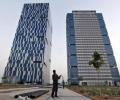
The International Financial Services Centres Authority (IFSCA) has proposed key exemptions to the current listing framework and measures for setting up holding companies (holdcos) and special purpose acquisition companies (SPACs) to encourage domestic startups list at GIFT City, the country's only international financial services centre (IFSC). Under the current framework, to be eligible to list on IFSC exchanges, an issuing company should have operating revenue of at least $20 million in the preceding financial year and average pre-tax profits of at least $1 million during the preceding three financial years. An expert committee has noted these conditions have acted as hurdles to listing new-age companies, and they need a relook.
The Securities and Exchange Board of India's (Sebi's) six-step plan to curb retail participation in speculative index derivatives may lead to a substantial drop in volumes - potentially by 30-40 per cent. These measures aim to reduce excessive speculation in the futures and options (F&O) segment, where daily turnover often exceeds Rs 500 trillion and retail investors end up on the losing side of the trade more often. Sebi has decided to increase the contract size from Rs 5 lakh to Rs 15 lakh, raising margin requirements and mandating the upfront collection of option premiums from buyers.

'As long as Sebi maintains transparency and market stability, the Jane Street episode is unlikely to deter long-term foreign capital.'
The government has exempted units of investment trusts and ETFs issued by entities based in GIFT City or traded in exchanges there from capital gains tax. The Central Board of Direct Taxes (CBDT) notified the exemption from capital gains tax any unit of investment trust; a unit of a scheme; and a unit of an Exchange Traded Fund (ETF) launched under the International Financial Services Centres Authority (Fund Management) Regulations, 2022. Gujarat International Finance Tec-City (GIFT)-IFSC is being promoted as a tax-neutral enclave for the financial sector.

Mutual funds (MFs) reinforced their record monthly inflows in October with an investment of Rs 87,000 crore (up to October 29), softening the downside pressure on domestic markets. Their prior record for monthly inflows was Rs 48,139 crore in May. This unprecedented monthly buying partially countered record monthly sales by foreign portfolio investors (FPIs) of Rs 1.1 trillion last month.

Much is riding on the role of market intermediaries to get this platform going
Much is riding on the role of market intermediaries to get this platform going

The race to acquire diversified fintech firm Religare Enterprise Limited (REL) intensified as Dabur group promoters, the Burman family, said it was going ahead with the open offer on Monday and claimed that the counter offer made by US-based businessman Digvijay Gaekwad wasn't valid and will not stand scrutiny of market regulator Sebi. The Burman family claimed that the competing offer falls outside the 15-day window stipulated by the Sebi takeover code, following their initial offer on October 4th, 2023.

Mutual funds (MFs) have lined up information technology (IT) funds, indicating that technology stocks are back on fund managers' radar after a hiatus. Over the past 18 months, stock prices for companies in the software space have either corrected or remained subdued. Fund houses have launched five IT-based sectoral funds in the past three months, with three of them taking the passive route.
There is a need for further focus and strengthening of guidelines.

Bajaj Auto - the country's most valuable two-wheeler (2W) company by market capitalisation - met Street expectations in the January-March quarter (Q4) of 2024-25 (FY25) but still ended Friday as the worst performer on the Nifty 50, slipping 3.1 per cent.
